With the season set to begin as the snow melts, it is not long now before we are heading back out on the golf course. To get the ball rolling, I thought I would start with breaking down the graph below. This graph represents the soils’ ability in Atlantic Canada to digest thatch. When I refer to the soils ability to digest thatch, I am of course referring to the giant microbial community beneath our feet that relies on thatch as a food source.
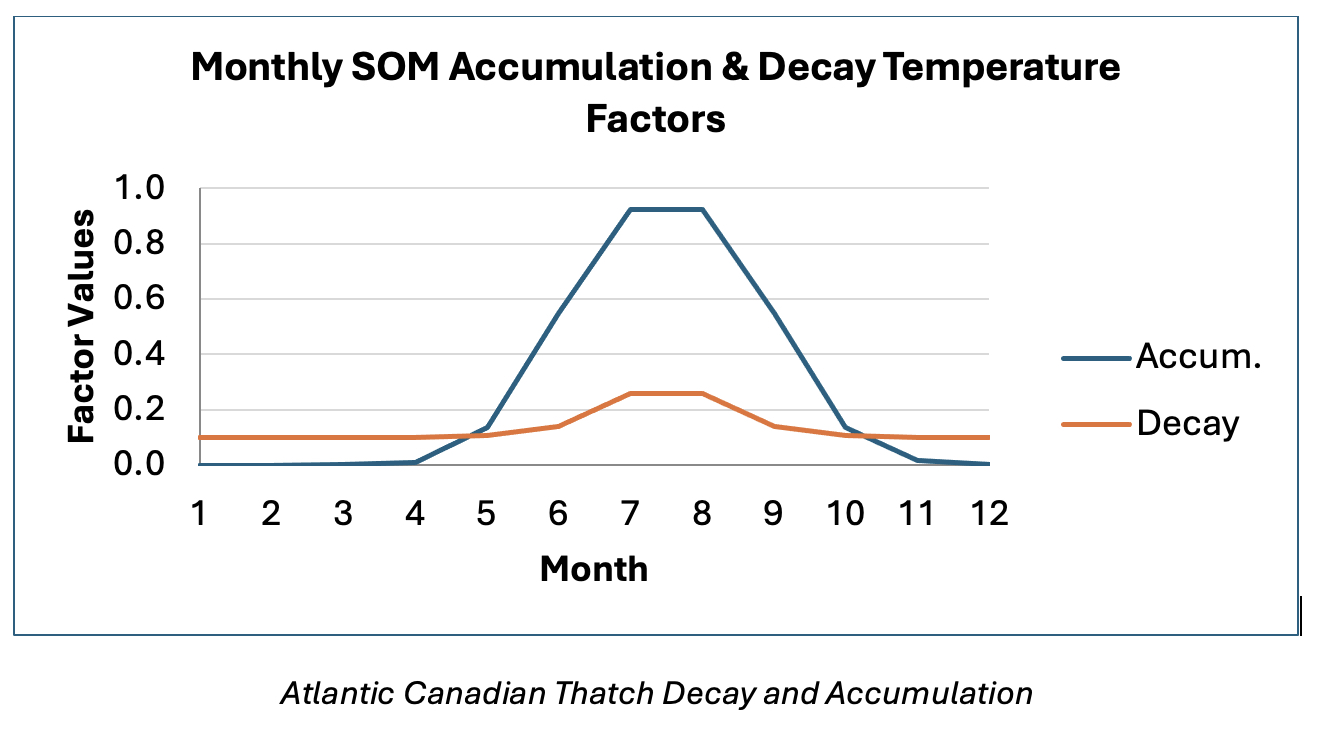
So, looking at this graph, we can quickly deduce that there may be a problem. The blue line on top represents grass growth, thus thatch accumulation, and the orange line represents the microbe’s ability to consume that created thatch. In a perfect world the orange line and the blue line would be nearly the same, meaning that microbes are keeping up with thatch digestion, and in doing so, are producing plant available food at the same time.
The reason that our orange line, the rate of decay, remains so much lower than the created thatch line, is mainly because of our soil temperatures. A cool Spring and Fall doesn’t allow for a whole lot of activity, but we certainly still need acceptable stands of grass during these months, so ensuring the grass is growing is a necessity.
So how do we attack a problem like this? What can we do to help our soils produce food for our plants while digesting thatch at the same time? Can we get to a point where mechanical aeration is not needed? Become a member of Haughn Turf today to join the discussion!